
Understanding Operator Certification Standards in East Africa
Operator Certification Standards
You may have the skills to operate heavy machinery. You may have spent months or even years around construction sites, mining projects, road works, or industrial operations.
Yet when a job opportunity arises, one question often stands in the way: Do you have operator certification?
For many aspiring machine operators across East Africa, this is where opportunities are either won or lost.
Employers are no longer looking for people who simply claim they can operate equipment.
They want proof that you have been trained, assessed, and certified to perform the job safely and professionally.
This shift has made operator certification one of the most valuable qualifications in today’s heavy equipment industry.
As infrastructure development continues to accelerate across Uganda, Kenya, Tanzania, Rwanda, South Sudan, and the Democratic Republic of Congo, the demand for certified operators continues to grow.
Whether you want to operate an excavator, bulldozer, wheel loader, motor grader, forklift, or crane, understanding operator certification standards can help you position yourself for success.
More importantly, it can help you avoid being overlooked when opportunities become available.
Why operator certification has become a hiring requirement
A few years ago, practical experience alone could help you to secure employment as a machine operator.
Today, the industry is changing. Large construction companies, mining contractors, logistics firms, and infrastructure developers are investing millions of dollars in equipment and projects.
Because of this investment, they need operators who can work efficiently while maintaining the highest safety standards.
This is why operator certification has become increasingly important. Certification gives employers confidence that you understand machine controls, operational procedures, maintenance requirements, and workplace safety regulations.
It demonstrates that your skills have been tested and verified by a professional training institution.
Many employers now prioritize certified operators because certification reduces workplace risks and improves productivity.
If two candidates apply for the same position, the certified operator will often have a stronger advantage.
But wait a minute, do you really understand what operator certification means
There is a common misconception that operator certification is simply a document issued after attending a training course. In reality, certification represents a formal verification of competence.
When you undergo certification training, you are expected to learn much more than how to move a machine.
You develop an understanding of machine systems, site safety procedures, equipment inspections, operational techniques, and risk management practices.
You are then assessed to determine whether you can apply this knowledge effectively in practical working environments.
Operator certification proves that you can operate machinery safely, responsibly, and professionally.
It assures employers that you possess the skills required to perform the job according to industry standards.
The certificate itself is important, but the knowledge and competence behind it are what truly make you valuable in the workplace.
The growing importance of operator certification in East Africa
East Africa is currently experiencing significant growth in construction, mining, transportation, agriculture, and industrial development.
Governments are investing heavily in roads, bridges, airports, energy projects, and urban expansion initiatives.
These projects require skilled operators who can handle sophisticated machinery safely and efficiently.
As industries expand, companies are becoming more selective during recruitment.
They want operators who can contribute immediately without requiring extensive additional training.
This is one of the reasons why operator certification is becoming a standard expectation rather than an optional qualification.
For job seekers, certification provides a competitive edge. It demonstrates professionalism and a commitment to industry best practices.
It also increases your credibility when applying for positions both within your country and across the East African region.
Operator certification can significantly improve your employability in a highly competitive job market.
Suggested Training Courses
The safety standards behind operator certification
Safety is at the heart of every professional operator certification program. Heavy machinery is powerful equipment that must be handled with precision and care. A single mistake can lead to injuries, damaged equipment, costly project delays, or even fatalities.
During certification training, you learn how to identify workplace hazards, conduct pre-operational inspections, interpret safety guidelines, and respond appropriately to emergency situations.
These skills are essential because employers want operators who can help maintain safe working environments.
A certified operator understands that safety is not just about personal protection. It is also about protecting colleagues, project assets, and the reputation of the organization.
Companies value certified operators because they contribute to safer, more productive worksites.
How FHEMTS supports your certification journey
At FHEMTS, the goal is not simply to issue certificates. The focus is on developing competent operators who are prepared for real employment opportunities.
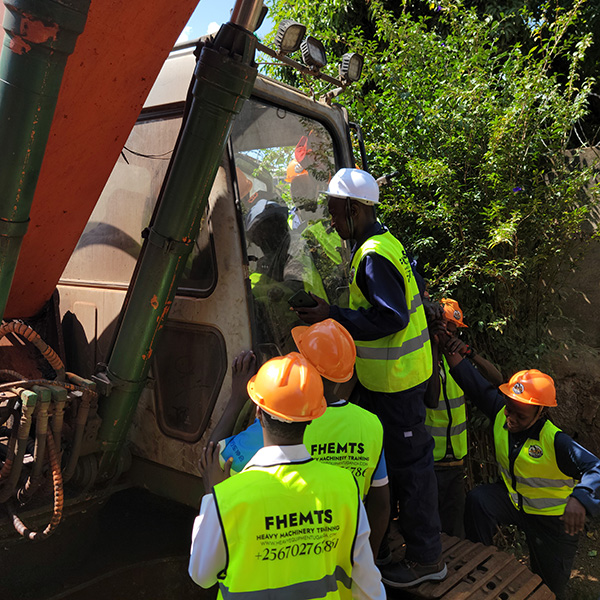
Training programs are structured to combine theoretical instruction with practical hands-on experience.
This approach allows you to gain confidence while operating equipment under the guidance of experienced instructors.
Throughout the training process, you learn industry-standard operational techniques, safety procedures, machine maintenance practices, and workplace expectations.
What makes FHEMTS particularly valuable is its commitment to preparing trainees for the realities of the field.
The training environment is designed to reflect actual working conditions, helping you develop the competence employers are looking for.
FHEMTS equips you with practical skills, professional knowledge, and operator certification that can strengthen your career prospects across East Africa.
Let us take a look at the career opportunities after obtaining operator certification
One of the most rewarding aspects of earning operator certification is the variety of career opportunities it can unlock.
Certified operators are needed in construction companies, mining operations, road construction projects, agricultural enterprises, logistics organizations, manufacturing facilities, and energy developments.
As industries continue to grow, the need for qualified operators is expected to increase. Employers are constantly searching for individuals who can demonstrate competence and professionalism from the very beginning.
Certification can also contribute to career advancement. Many supervisors and project managers started as machine operators before progressing into leadership positions.
Having recognized certification provides a strong foundation for future growth within the industry.
The investment you make in operator certification today can create opportunities for years to come.
Now how do you prepare yourself for long-term success
The heavy equipment industry is becoming more professional and more competitive. Employers are demanding higher standards, and technology continues to transform the way machines operate.
Operators who continuously improve their skills and maintain recognized qualifications will be best positioned for future success.
Obtaining operator certification is one of the most practical steps you can take toward building a stable and rewarding career.
It demonstrates your commitment to excellence and shows employers that you are serious about your profession.
As East Africa continues to develop, certified operators will remain among the most sought-after professionals in the construction and industrial sectors.
Conclusion
The question is no longer whether operator certification is important. The real question is whether you are prepared to take advantage of the opportunities that certification can create.
Across East Africa, employers increasingly seek operators who have proven their skills through recognized training and assessment.
Operator certification provides the credibility, competence, and confidence needed to succeed in today’s competitive job market.
At FHEMTS, you can gain the practical experience, professional training, and industry-recognized certification needed to stand out from the competition.
Don’t allow a lack of certification to hold you back from your career goals. Enroll with FHEMTS today and take the first step toward becoming a certified heavy equipment operator trusted by employers across East Africa.