Top Infrastructure Projects Driving Heavy Machinery Jobs in Uganda in 2026
Top Infrastructure Projects Driving Heavy Machinery Jobs in Uganda in 2026
Heavy Machinery jobs driven by the growing infrastructural projects
Have you ever looked at a major construction project and wondered who makes it possible?
When you see a new highway stretching across the countryside, a modern bridge connecting communities, or a massive industrial facility rising from what was once open land, it is easy to admire the finished project.
What many people never stop to think about is what happens before the first concrete is poured or the first building stands tall.
Every successful infrastructure project begins with powerful machines and skilled operators working together to shape the future.
That is exactly why heavy machinery jobs are becoming some of the most promising careers in Uganda today.
As Uganda continues investing in roads, railways, airports, industrial parks, and energy developments throughout 2026, the demand for heavy machinery jobs continues to grow.
Every project depends on trained operators who understand how to use different machines safely, efficiently, and professionally.
If you have been considering a career in heavy equipment operation, there has never been a better time to understand where these opportunities are coming from and why proper training can give you a competitive advantage.
How is Uganda’s infrastructure development opening new career paths?
Uganda’s infrastructure sector is expanding at a remarkable pace. Government investments, private developers, and international partnerships are transforming transport networks, industrial centers, and energy facilities across the country.
Behind every completed project is a team of heavy equipment operators whose work begins long before the public sees the finished results. Every stage of construction requires different machines performing specialized tasks.
Excavators prepare the ground, bulldozers clear land, graders create perfectly level surfaces, wheel loaders move construction materials, rollers strengthen road foundations, and cranes lift massive structural components into position.
Without skilled operators controlling these machines, even the most ambitious infrastructure project would struggle to move forward.
This growing construction activity continues to create more opportunities for trained professionals who are ready to work safely and efficiently.
Here are the top infrastructure projects driving heavy machinery jobs
Kampala–Jinja expressway project
The Kampala–Jinja Expressway remains one of Uganda’s most important transport projects because it is designed to improve movement between Kampala and the eastern region while supporting trade and economic growth.
Before motorists can enjoy a smooth journey, heavy machinery operators spend months preparing every section of the highway.
The first machine usually seen on this type of project is the excavator. Excavators remove topsoil, dig drainage channels, excavate foundations for bridges and culverts, and shape the landscape according to engineering designs.
Their hydraulic power allows operators to move large volumes of earth with speed and precision. Once excavation is complete, the bulldozer takes over.
Bulldozers push loose soil, remove rocks, clear vegetation, and spread earth across the construction area.
Their role is to create a stable working platform that allows other machines to continue safely.
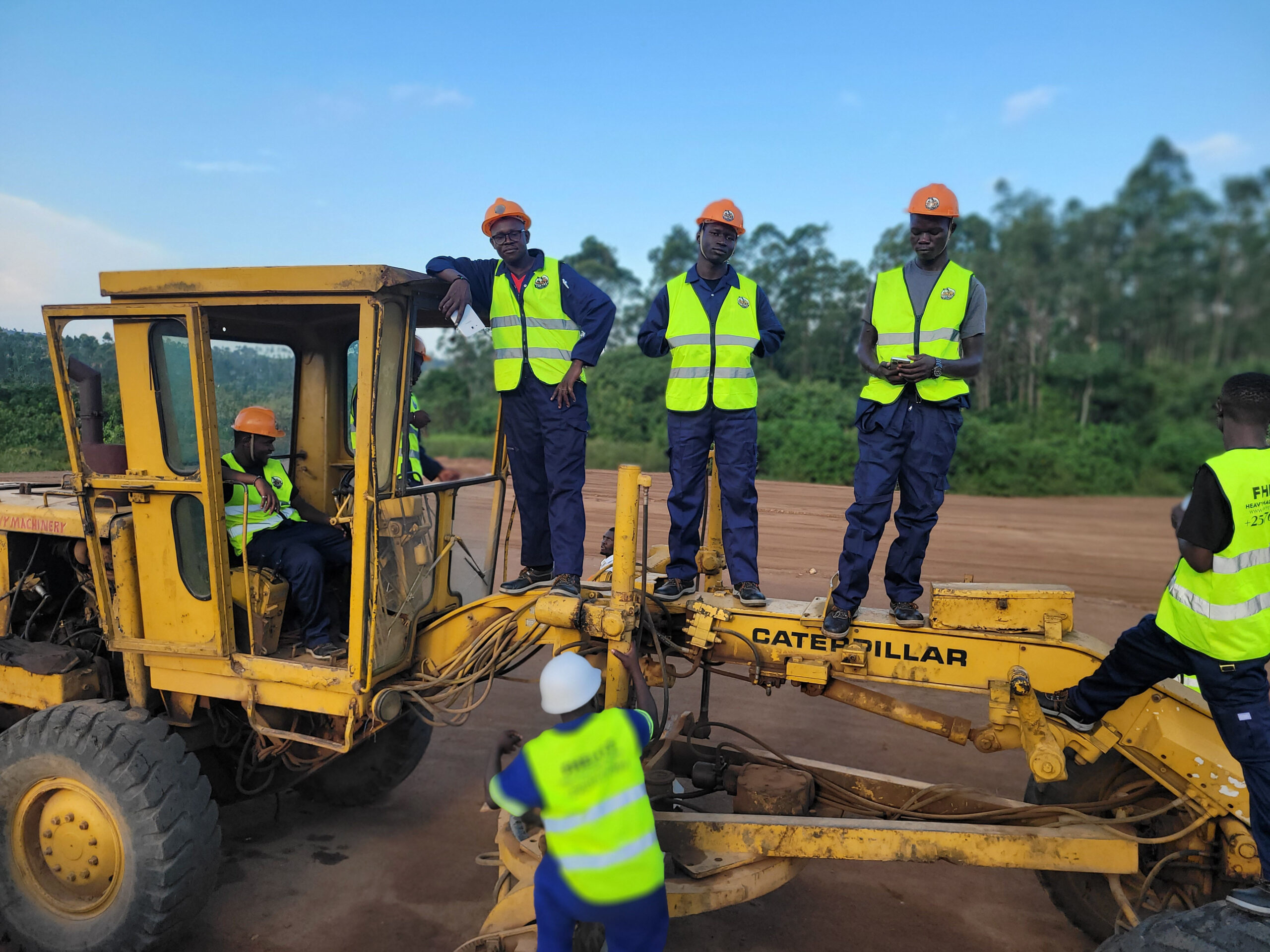
After the ground has been roughly shaped, the motor grader performs one of the most precise jobs on the site.
Its long blade trims and levels the road surface to the exact height and slope specified by engineers.
A skilled grader operator ensures the road drains water properly and provides a smooth foundation for later construction.
The wheel loader supports the entire operation by loading gravel, crushed stone, sand, and other materials into dump trucks.
It also transports materials around the site, reducing delays and improving productivity. The vibratory roller then compacts each layer of soil and aggregate.
Compaction strengthens the road base, prevents future settlement, and increases the lifespan of the highway.
Finally, dump trucks transport excavated material away from the site while delivering fresh construction materials, ensuring every stage of the project continues without interruption.
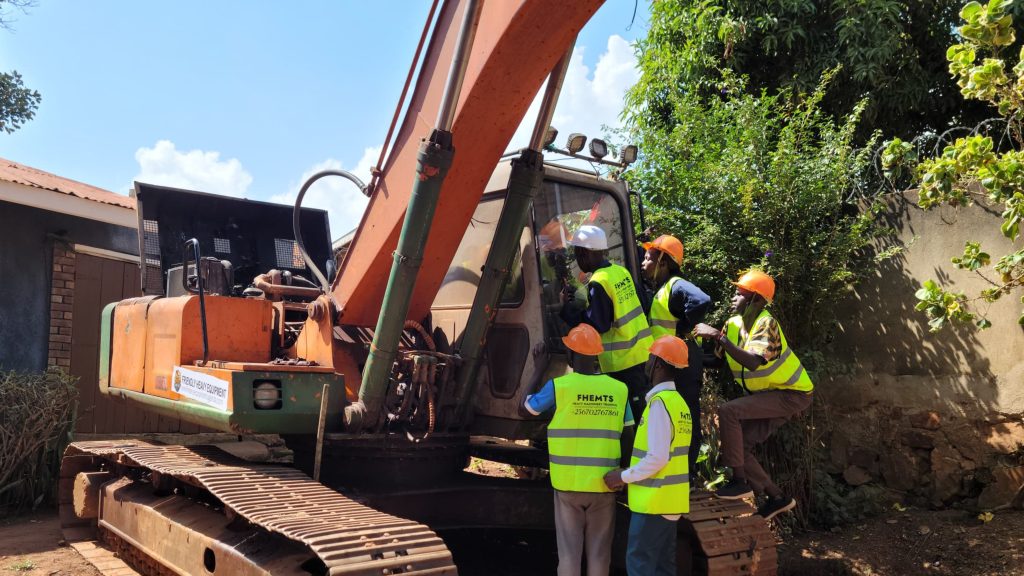
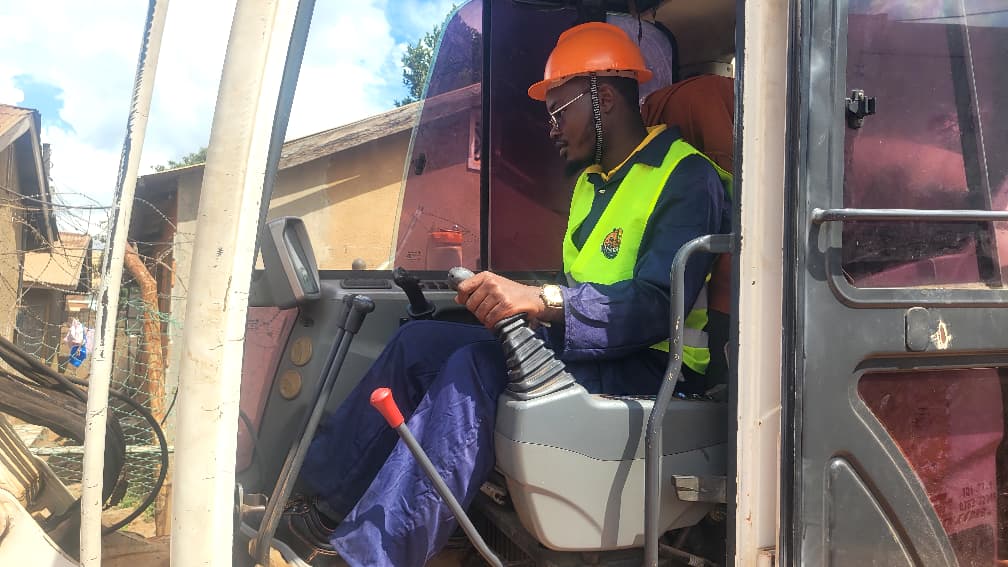
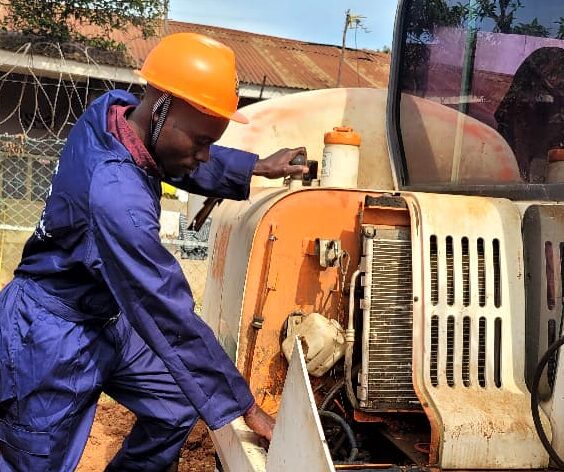
Excavator Operator Training at FHEMTS
Standard Gauge Railway (SGR)
The Standard Gauge Railway is another major infrastructure project expected to strengthen regional trade and improve cargo transportation across Uganda.
Railway construction demands careful planning because every section of the track must meet strict engineering standards.
The excavator begins by digging drainage channels, removing unsuitable soil, and preparing the railway corridor.
Since rail tracks require stable foundations, excavation must be carried out accurately to avoid future ground movement.
The bulldozer clears the route and pushes large amounts of soil to form railway embankments. It also helps prepare access roads that allow construction teams and equipment to reach different sections of the project.
The motor grader shapes the railway formation by creating an even surface where ballast and track materials will later be placed. Precision grading is essential because even minor surface variations can affect rail alignment.
The wheel loader loads crushed stone, commonly known as ballast, into trucks and distributes construction materials throughout the site. Ballast supports the railway sleepers and allows proper drainage around the tracks.
Large crawler cranes and mobile cranes lift heavy bridge sections, steel beams, and rail components that cannot be handled manually.
Throughout the project, dump trucks continuously transport earth, gravel, and construction materials, helping maintain an efficient workflow from one work area to another.
The East African Crude Oil Pipeline is one of the region’s most significant energy projects.
Constructing a pipeline that stretches across long distances requires careful excavation, environmental protection, and specialised heavy equipment.
The excavator plays one of the most important roles by digging long pipeline trenches that follow carefully surveyed routes.
Operators must excavate to precise depths to ensure the pipeline is installed safely and according to engineering specifications. For that case, learning how to operate an excavator gives you an advantage in obtaining a heavy machinery job at EACOP
Before trenching begins, bulldozers clear vegetation, remove obstacles, and prepare access roads for construction teams. They also help restore the land after sections of the pipeline have been completed.
The wheel loader transports bedding materials such as sand and fine aggregate into the trenches. These materials protect the pipeline from damage after installation.
Specialized side boom tractors carefully lift and lower welded pipe sections into the excavated trenches.
Unlike ordinary cranes, side booms are designed specifically for pipeline work because they can move alongside the trench while safely supporting long sections of pipe.
Large mobile cranes lift heavy valves, pumping equipment, and structural components at pipeline stations, while dump trucks transport excavated soil and construction materials throughout the project.
Every machine works together to ensure the pipeline is constructed safely while meeting strict environmental and engineering requirements.
Kabalega Industrial Park and Oil Refinery
Kabalega Industrial Park and the planned oil refinery represent Uganda’s growing industrial ambitions.
These developments require extensive earthmoving, heavy lifting, and material handling before factories and processing facilities become operational.
The excavator prepares building foundations, digs service trenches, and removes unsuitable ground before construction begins.
The bulldozer clears large sections of land and creates level platforms for buildings, warehouses, and industrial infrastructure.
The wheel loader moves aggregates, sand, and construction materials between different work zones, while forklifts become increasingly important as warehouses and production facilities begin taking shape.
Forklift operators transport pallets, machinery parts, and building materials safely around the industrial site.
Large mobile cranes install steel structures, storage tanks, and heavy industrial equipment that would be impossible to position manually.
These machines require experienced operators because every lift must be carefully planned to ensure safety and accuracy.
Airport expansion projects
You can now stand a chance to land a heavy machinery job at the airport as an operator. Airport expansion projects demand exceptional precision because every construction activity must comply with strict engineering and aviation standards.
Heavy equipment operators contribute significantly to both runway development and terminal construction.
Excavators dig foundations for terminal buildings, drainage systems, and underground utilities before construction begins.
Motor graders carefully level runway surfaces to meet exact design specifications, while rollers compact each layer of soil and aggregate to create stable foundations capable of supporting aircraft.
During terminal construction, mobile cranes lift structural steel, roofing materials, and concrete components into place.
Meanwhile, telehandlers and forklifts transport construction materials around busy work areas where efficiency is essential to keep the project on schedule.
Urban road upgrades across Uganda
Road rehabilitation projects in cities present different challenges because operators work in busy environments with nearby traffic, businesses, and pedestrians. These projects demand precision, patience, and strong safety awareness.
The excavator removes damaged drainage systems and excavates new trenches before road reconstruction begins.
Skid steer loaders operate efficiently in confined urban spaces where larger machines cannot easily manoeuvre.
Their compact size makes them ideal for clearing debris, loading materials, and working around existing infrastructure.
The wheel loader supplies aggregates and construction materials, while the motor grader creates smooth road profiles before surfacing.
Finally, rollers compact every layer to ensure the road can withstand heavy traffic for many years.
Why are heavy machinery jobs Continuing to grow?
Uganda’s infrastructure transformation is creating long-term demand for skilled machine operators because every major project depends on heavy equipment from beginning to completion.
Contractors are no longer looking only for people who can operate a machine. They want professionals who understand daily inspections, preventive maintenance, workplace safety, and teamwork on modern construction sites.
This is why professional training continues to make a real difference. Institutions such as FHEMTS School help you as an aspiring operator develop practical skills that match the expectations of today’s construction industry.
Learning how different machines work and understanding their role on real construction projects prepares you to enter the workforce with confidence and professionalism.
Conclusion
Uganda’s biggest infrastructure projects are building more than roads, railways, airports, and industrial parks.
For that case therefore, they are creating exciting career opportunities for skilled equipment operators.
If you are ready to become part of this growing industry, invest in quality heavy machinery training today by enrollingwith FHEMTS. This can help prepare you for the opportunities shaping Uganda’s future.