Why Heavy Machinery Batteries Fail and How to Prevent It
Why Heavy Machinery Batteries Fail and How to Prevent It
Machinery batteries can fail at the worst possible moment just when you need to start an excavator, bulldozer, wheel loader, or forklift to begin your work.
You turn the ignition key, hear a clicking sound, and the engine refuses to start. Meanwhile, work is delayed, operators wait, and the machine remains idle.
Although machinery batteries failure may seem like a small maintenance problem, it can disrupt an entire construction site if you do not identify its cause early.
Understanding why machinery batteries fail helps you recognize warning signs, perform basic checks, and prevent unnecessary breakdowns.
Whether you operate heavy equipment daily or are learning to handle it, knowing how to care for the battery is an important part of responsible machine operation.
Why do heavy machinery batteries fail?
Heavy equipment operates under demanding conditions. Dust, vibration, high temperatures, long periods of inactivity, and electrical faults can all shorten battery life.
When you understand these causes, you can take practical steps to protect the machinery batteries and keep your machines ready for work.
Leaving the machine unused for too long
When you leave a machine parked for several days or weeks, its battery can gradually lose charge. Some electrical systems continue drawing small amounts of power even when the engine is switched off.
If the battery becomes deeply discharged, it may struggle to start the engine or suffer permanent damage. To prevent this, follow the manufacturer’s storage instructions.
If you expect the machine to remain unused for an extended period, arrange appropriate battery maintenance and charging. Do not leave the ignition or electrical accessories switched on unnecessarily.
Loose or corroded battery connections
Your machine may have a healthy battery but still fail to start because the electrical connections are poor. Loose terminals, corrosion, or damaged cables can interrupt the flow of current needed by the starter motor.
Look for white, bluish, or greenish deposits around the terminals, as well as loose connections or damaged insulation. Before inspecting or cleaning your machinery batteries, switch off the machines and follow the manufacturer’s isolation procedures.
Wear suitable protective equipment, and never disconnect battery terminals carelessly. If you are unsure, ask a qualified technician to carry out the work safely.
Extreme heat and cold
Temperature affects how efficiently a battery works. Excessive heat can accelerate internal deterioration and water loss in batteries that require maintenance. Cold conditions can reduce the battery’s ability to deliver the current needed to start an engine.
Heavy machinery working in hot environments needs particular attention because engine compartments can become very warm.
Keep battery ventilation clear, ensure the battery is securely mounted, and follow the manufacturer’s recommendations for inspection and replacement.
Charging system problems
Sometimes the battery is not the real problem. A faulty alternator, damaged wiring, or defective voltage regulator may prevent the battery from recharging correctly while the engine runs.
If your machine repeatedly struggles to start, the battery warning light stays illuminated, or electrical equipment behaves unusually, have the charging system checked.
Replacing the battery without addressing the underlying fault may only provide a temporary solution.
Incorrect battery use and poor maintenance
Using the wrong battery type or capacity can create starting difficulties and may affect the machine’s electrical system. Similarly, repeatedly allowing the battery to become deeply discharged can shorten its service life.
Always use a battery that meets the equipment manufacturer’s specifications. For serviceable batteries, check electrolyte levels only when the manufacturer’s instructions permit it, using the correct protective equipment and procedures. Sealed machinery batteries should not be opened.
How can you prevent machinery battery failure?
Preventive maintenance is often easier and less expensive than dealing with an unexpected breakdown. Before starting work, pay attention to how quickly the engine turns over and whether the dashboard displays battery-related warnings.
Include the battery in your routine inspection schedule. Check that it is securely mounted, terminals are clean and tight, cables are undamaged, and there are no signs of leakage, swelling, or unusual heat.
Any damaged battery should be assessed by a qualified technician. Avoid repeatedly cranking the engine when it refuses to start.
Excessive starting attempts can overheat the starter motor and further discharge the battery. Instead, stop and investigate the cause according to the machine’s operating manual.
For machinery that sits idle for long periods, use an approved battery maintainer or charging procedure when appropriate.
Keep records of inspections, charging problems, replacements, and repairs so you can identify recurring faults before they cause major delays.
Let’s look at the practical heavy machinery battery inspection checklist
Before starting your excavator, bulldozer, forklift, or wheel loader, take a few minutes to inspect your machinery battery. This simple routine can help you identify early warning signs before they cause an unexpected breakdown.
Check the battery casing: Look for cracks, swelling, leakage, or other visible damage. Do not use a damaged battery; report it for professional assessment.
Inspect the terminals: Check for corrosion, loose connections, or damaged terminal covers. Do not touch or adjust connections unless you are trained and authorized to do so.
Examine the cables: Look for worn insulation, exposed wires, fraying, or signs of overheating.
Check the battery mounting: Confirm that the battery is securely held in place and that its mounting brackets are not damaged.
Observe the battery warning light: After starting the engine, check whether the warning light goes out as expected. If it remains illuminated, follow the manufacturer’s instructions and report the fault.
Pay attention to starting performance: Notice slow cranking, repeated clicking, or difficulty starting. These symptoms may indicate a weak battery, poor connections, or a starter or charging-system fault.
Check the charging system when necessary: If the battery repeatedly loses charge, arrange for a qualified technician to test the battery and charging system.
Record and report defects: Document any abnormal findings and inform your supervisor or maintenance team before the machine is put into service.
Important safety reminder: Switch off the machine and follow the manufacturer’s isolation procedures before inspecting the battery closely.
Wear appropriate protective equipment, keep flames and sparks away, and never open a sealed battery or attempt to jump-start equipment unless you are trained and following the approved procedure.
Make battery inspection part of your daily pre-start routine. Detecting a problem early can save time, reduce avoidable downtime, and help keep your machine ready for work.
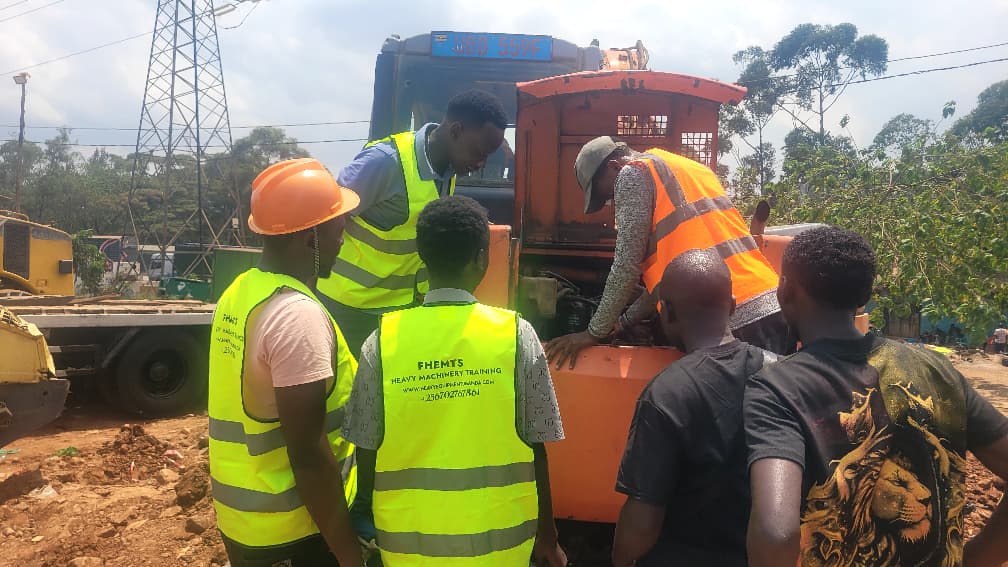
Practical heavy machinery battery inspection training at FHEMTS
What should you do when a machine battery fails?
If your machine refuses to start, do not immediately assume that the battery needs replacing. First, park the machine safely, apply the parking brake, switch off unnecessary electrical loads, and follow the manufacturer’s troubleshooting instructions.
Check the dashboard for warning lights and observe whether the engine turns slowly, clicks, or remains completely unresponsive.
These symptoms can help a technician distinguish between a discharged battery, poor connections, starter problems, and charging-system faults.
Never attempt to jump-start heavy machinery without confirming the correct procedure, voltage, and connection points. Incorrect connections can cause sparks, battery explosions, electrical damage, or serious injury.
Keep flames and smoking materials away from batteries, and seek qualified assistance whenever you are uncertain.
Did you know you can learn proper machine maintenance at FHEMTS?
Knowing how to operate heavy equipment also means understanding the basic systems that keep it running reliably.
At Friendly Heavy Equipment and Machinery Training School (FHEMTS), practical machinery knowledge goes hand in hand with safe operating habits.
Understanding battery inspections, starting systems, warning signs, and routine maintenance can help you identify problems early and communicate them correctly to a technician.
As an operator, you are not expected to repair every electrical fault yourself. Your responsibility is to carry out the checks you are trained and authorized to perform, recognize when something is wrong, and report the problem before it develops into a bigger failure.
Conclusion
A failed battery can delay work, increase maintenance costs, and keep valuable equipment out of service. Regular inspections, correct charging, secure connections, and timely professional checks can help you avoid many common battery problems.
Do you want to build your heavy machinery operating skills? Enroll with FHEMTS to learn more about our training programmes.