How Dirty Hydraulic Oil Can Damage Heavy Machinery
How Dirty Hydraulic Oil Can Damage Heavy Machinery
You may look at hydraulic oil and see nothing more than a fluid moving through hoses and components, but dirty hydraulic oil can quietly cause serious damage inside heavy machinery.
A machine may continue working normally for some time while contamination slowly wears down pumps, valves, cylinders and other hydraulic components.
By the time you notice weak movement, unusual noise or overheating, the damage may already be expensive. As an operator, you do not need to be a hydraulic technician to understand why oil cleanliness matters.
You need to recognize how hydraulic systems work, notice changes in machine performance and understand what can happen when contaminated oil keeps circulating through the system.
Why does hydraulic oil become dirty?
Hydraulic oil can become contaminated in several ways. Dust and dirt can enter through poorly sealed reservoirs, damaged breathers, dirty filler areas or during maintenance.
Water can also enter the hydraulic system through condensation, leaks or exposure to wet working environments. Metal particles may appear when internal components begin wearing, while rubber or seal material can enter the oil when components deteriorate.
The problem becomes more serious because hydraulic systems are designed to operate with precise clearances. Components such as hydraulic pumps, control valves and servo mechanisms depend on clean oil to move smoothly and maintain the correct pressure.
When dirty hydraulic oil circulates through these components, contamination can interfere with their operation and accelerate wear.
One of the biggest dangers of dirty hydraulic oil is abrasive wear. Small particles suspended in the oil can pass between moving surfaces and act almost like sandpaper.
Every operating cycle can create additional wear, gradually reduce the efficiency and work life of expensive components. The hydraulic pump is particularly important because it creates the flow and pressure needed to operate the machine.
When contaminated oil passes through the pump, particles can damage internal surfaces and increase clearances. As those clearances increase, the pump may become less efficient, producing reduced hydraulic performance and generating more heat.
Control valves can also suffer from contamination. Fine particles may interfere with the precise movement of valve components, causing sticking, restricted flow or inconsistent machine response.
You may notice that a boom, bucket, blade or attachment no longer responds as smoothly as it once did. Hydraulic cylinders are affected as well. Contaminated oil can contribute to seal wear, allowing internal or external leakage to develop.
Once seals deteriorate, the cylinder may lose efficiency and the machine may struggle to hold or move a load properly.
What signs should you watch for?
You are often the first person who can detect a hydraulic problem because you operate the machine every day. Pay attention when a machine begins behaving differently from normal.
Slow hydraulic movement is one important warning sign. If an excavator boom takes longer to lift, a loader bucket responds slowly or a grader attachment feels weaker than usual, contamination could be one possible cause.
You may also notice jerky or inconsistent movements when the hydraulic system should operate smoothly. Unusual hydraulic noise deserves attention too.
Whining, knocking or excessive pump noise can indicate problems such as restricted flow, aeration, low oil levels or component wear. Dirty oil may contribute to these problems, particularly when contamination has already damaged internal surfaces.
Another warning sign is excessive heat. When hydraulic components become worn or contaminated, the system may lose efficiency. More energy can then be converted into heat instead of useful hydraulic work.
If the hydraulic temperature continues rising beyond normal operating conditions, you should not simply continue working and hope the problem disappears.
Dirty hydraulic oil can contribute to overheating because contamination can interfere with efficient hydraulic operation. A worn pump, restricted filter or sticking valve may force the system to work harder to produce the required performance.
As efficiency decreases, more energy is lost as heat. That heat can raise the temperature of the hydraulic oil and place additional stress on seals, hoses and other components.
High temperatures can also accelerate oil degradation, creating a cycle in which poor oil condition contributes to component problems while excessive heat further reduces oil performance.
This is why overheating should not always be treated as a separate problem. If your machine is experiencing repeated hydraulic temperature increases, oil condition and filtration should be among the factors considered during diagnosis.
Can changing dirty hydraulic oil prevent damage?
Changing hydraulic oil can help, but simply draining and replacing the oil does not solve every contamination problem.
If the system contains damaged components, contaminated reservoirs, blocked filters or debris left inside the hydraulic circuit, fresh oil can become contaminated again.
That is why proper hydraulic maintenance involves more than changing oil according to a calendar. You should follow the manufacturer’s recommended maintenance schedule, use the correct hydraulic oil specification and replace filters at the recommended intervals.
During servicing, keep containers, tools and filler areas clean so you do not introduce new contamination. Oil condition can also provide useful information about what is happening inside the machine.
Unusual colour, visible particles, a burnt smell or signs of water contamination should not be ignored. Where appropriate, oil sampling and laboratory analysis can provide more detailed information about contamination levels and component wear.
What should you do when you suspect contamination?
If you notice slow hydraulic movements, unusual noises, overheating or inconsistent attachment performance, do not automatically assume that the hydraulic oil is the only cause.
Low oil level, blocked filters, pump problems, air entering the system and other mechanical faults can produce similar symptoms.
Start by stopping the machine safely and reporting the problem according to your workplace procedures. Check the hydraulic oil level and look for obvious leaks when it is safe to do so.
Do not open pressurized hydraulic components or attempt repairs beyond your training. Hydraulic systems can store dangerous pressure even after a machine has been switched off.
A qualified technician can inspect the system, check filtration, test hydraulic pressure and determine whether the oil needs replacement or whether contaminated oil has already caused component damage.
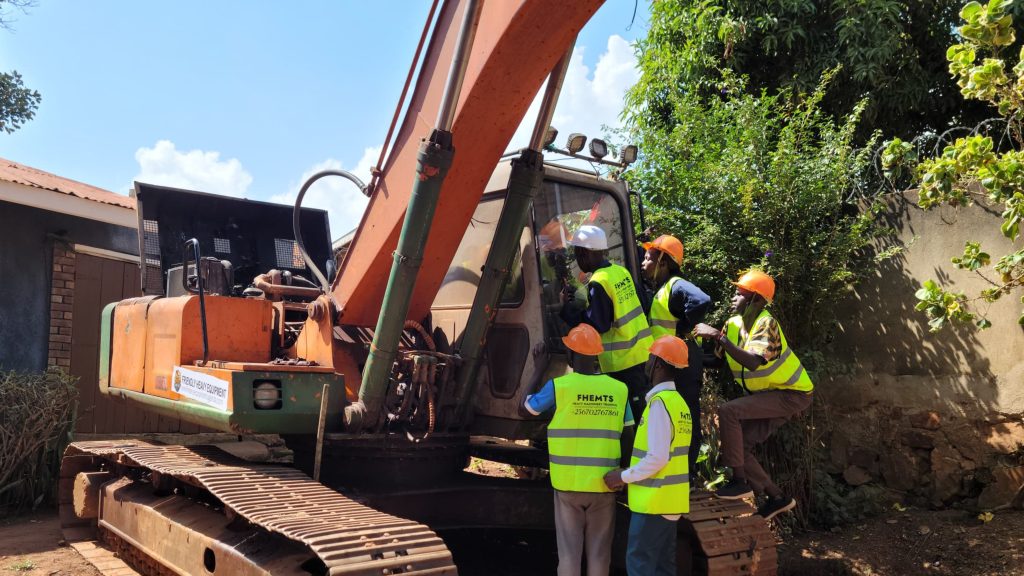
Trainees of FHEMTS Learning how to conduct daily inspections
What does this teach you as an operator?
Understanding dirty hydraulic oil teaches you to look beyond the controls in front of you. A professional operator pays attention to how the machine sounds, moves and responds because small changes can provide an early warning of developing problems.
You can protect hydraulic systems by keeping the machine clean, following correct operating procedures, reporting leaks quickly and never ignoring unusual hydraulic behavior.
Good operation and proper maintenance work together. Even the best-maintained machine can develop problems, but an attentive operator can help identify those problems before they become major failures.
At Friendly Heavy Equipment and Machinery Training School (FHEMTS), machine operation is about more than learning how to move controls.
You need to understand the equipment, recognize warning signs and develop safe operating habits that help protect both the machine and the people around it.
If you’re ready to build stronger heavy-machinery operating skills? Just Enroll with FHEMTS and take the next step toward becoming a safer, more knowledgeable and more professional machine operator.