


Fuel Efficiency Tips for Heavy Machinery Operators in Uganda
Are you aware that a machine can consume far more fuel in a single day simply because of poor operating habits?
When machines consume more fuel than necessary, operating costs rise quickly, projects become expensive, and profits reduce.
Yet in many situations, excessive fuel consumption is not caused by faulty machinery alone. It is often the result of poor operating habit
As a machine operator, your daily decisions directly affect how much fuel a machine consumes. The way you accelerate, brake, idle, lift loads, or plan movements can either improve efficiency or waste fuel unnecessarily.
As a skilled operator you should understand that fuel efficiency is not only about saving diesel. It is about increasing productivity, reducing machine wear, improving safety, and helping equipment perform at its best.
Today, companies are paying closer attention to operators who can manage machinery professionally while controlling operational costs.
This is why modern heavy equipment training now places greater emphasis on fuel-efficient operation and machine care.
Through professional instruction offered by our institution (FHEMTS), as an operator you are increasingly learning how proper machine handling contributes to both productivity and long-term equipment performance.
In this case therefore, here are the 8 important fuel efficiency tips that can help you operate machinery more professionally and effectively.
1. Avoid unnecessary idling
One of the most common causes of fuel wastage on worksites is unnecessary idling.
As an operator you should not leave the machine running during lunch breaks, conversations, loading delays, or while waiting for instructions.
Although this may appear harmless, an idling engine continues to consume fuel every minute. Over time, long periods of idling can lead to increased fuel costs, faster engine wear, and higher maintenance expenses
If the machine is not actively working for several minutes, you should switch off the engine to save a significant amount of fuel throughout the day.
As a professional operator you understand when idling is necessary and when it becomes wasteful. On busy construction sites, small habits often create the biggest difference.
If you learn how to minimize unnecessary engine running, it is one of the easiest ways to improve fuel efficiency immediately.
2. Operate smoothly instead of aggressively
When you aggressively operate a machine, it increases fuel consumption very quickly.
When you make sudden acceleration, rough braking, sharp turning, and unnecessary high-speed movements, it places excessive pressure on the engine and hydraulic systems leading to fuel consumption.
It is better you carry out smooth operation. This allows the machine to work efficiently while reducing strain on critical components.
Instead of you rushing machine movements, focus on maintaining controlled and steady operation.
Good operating habits include; accelerating gradually, avoiding sudden stops, maintaining stable speeds, using smooth hydraulic controls and turning carefully and steadily
When you operate smoothly, the machine consumes less fuel while maintaining better productivity. In addition, controlled operation reduces wear on tires, brakes, hydraulics, and engine systems.
Our experienced instructors at FHEMTS emphasize that smooth machine handling is one of the key characteristics that separates professional operators from inexperienced ones.
3. Conduct daily machine inspections
Fuel efficiency begins before the machine even starts working. A machine that is poorly maintained or mechanically damaged will always consume more fuel.
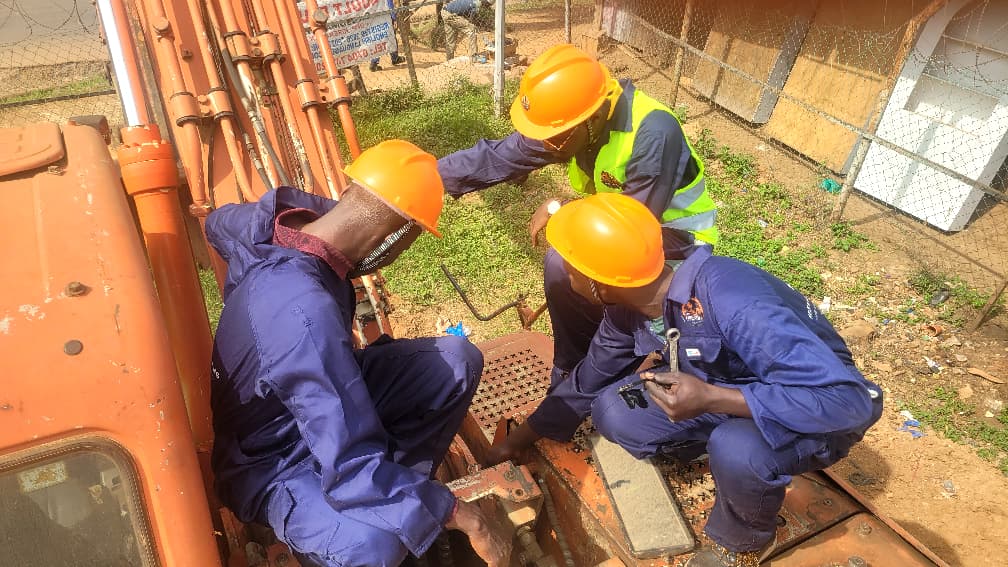
Before starting your shift, inspect the machine thoroughly. Daily inspections help you identify problems early before they affect machine performance.
You should always pay close attention to engine oil levels, hydraulic oil levels, air filters, fuel lines, cooling systems, hydraulic hoses and battery condition
For example, a clogged air filter reduces airflow into the engine, forcing it to burn more fuel to maintain performance.
Low tire pressure creates additional resistance, making the engine work harder during movement.
Daily inspections are not simply a safety requirement.
They are also an important fuel-saving practice that improves machine reliability and reduces breakdowns.
4. Use the correct working mode
Modern heavy machinery often comes with different operating modes designed for different tasks.
Some machines include economy mode, power mode, standard mode, or automatic settings.
When you use maximum power all the time, it wastes fuel unnecessarily. Not every task requires the machine to operate at full power.
For lighter work, use economy mode where available, reduce unnecessary engine revving, match machine power to the task and avoid operating beyond required performance levels.
Reserve high-power settings for demanding operations such as deep excavation, heavy lifting, or pushing dense materials.
Understanding machine settings and using them correctly is a major part of professional operation.
Operators who understand machine controls properly are often more productive and fuel-efficient.
5. Plan your work efficiently
Poor planning increases unnecessary machine movement and fuel consumption. Before you start work, take time to plan your operations carefully.
A machine that repeatedly travels long distances, changes direction constantly, or performs repeated movements wastes both fuel and valuable working time.
You can improve fuel efficiency by organizing materials properly, reducing unnecessary travel, positioning equipment strategically, planning loading and dumping areas well and minimizing repeated machine movement
For example, placing materials closer to the work area can significantly reduce fuel consumption over an entire project.
Efficient planning also improves productivity, reduces operator fatigue, and helps projects move faster.
6. Avoid overloading the machine
Overloading machinery is another major cause of excessive fuel consumption.
When you use a machine to carry more weight than recommended, the engine is forced to work harder to maintain performance. This increases fuel usage, engine strain, tire wear, hydraulic stress and risk of breakdowns
Whether operating a forklift, wheel loader, dump truck, or excavator, always follow the manufacturer’s recommended load limits.
As a professional operator understand that productivity is not about overworking the machine. It is about achieving efficient performance while protecting equipment from unnecessary damage.
If you do act responsible by handling the machine well, it improves fuel efficiency and extends the life of expensive machinery.
7. Follow maintenance schedules consistently
It is advisable that you carry out routine maintenance. This is one of the most important parts of fuel-efficient operation.
If you delay servicing, you may appear to save money temporarily, but it often leads to increased fuel consumption and costly mechanical failures later.
Regular maintenance should include; engine oil replacement, fuel filter replacement, hydraulic system servicing, tire replacements, cooling system inspection, lubrication of moving parts and belt and hose inspections
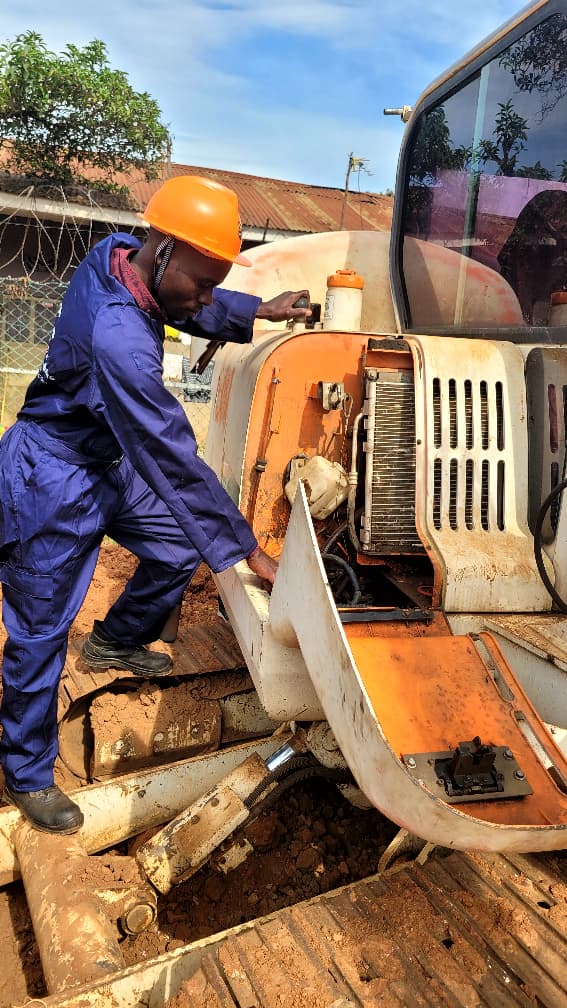
A properly serviced machine runs more efficiently, consumes less fuel, and experiences fewer breakdowns.
This is why heavy equipment training programs increasingly include maintenance awareness as part of operator development.
Through practical exposure and technical instruction, trainees at FHEMTS are encouraged to understand the relationship between machine care, productivity, and operational efficiency.
8. Improve your operating skills through professional training
Fuel efficiency is closely connected to operator skill and experience.
If you’re a well-trained operator, you should understand how machines respond under different conditions and knows how to minimize unnecessary fuel consumption.
Professional training helps you; understand machine systems, improve operating techniques, handle machinery safely, reduce operational mistakes and protect equipment from damage
Today’s employers are looking for operators who can deliver results while controlling costs.
Companies value operators who understand efficient machine handling because fuel expenses directly affect project budgets and company profits.
Professional instruction offered through our school (FHEMTS) continues to prepare you as an operator with practical skills that match current industry demands across Uganda’s growing construction and industrial sectors.
Why fuel efficiency matters more than ever
Across Uganda, infrastructure development continues to expand rapidly. New roads, commercial buildings, warehouses, industrial facilities, and agricultural projects are increasing the demand for heavy machinery.
However, rising fuel costs continue to challenge many businesses. Every liter of fuel wasted affects operational budgets.
Fuel-efficient operation helps companies: reduce operating costs, increase profitability, improve project efficiency, reduce downtime, extend machine lifespan and improve environmental responsibility
As an operator, your habits play a major role in achieving these goals. Employers appreciate operators who understand that efficient operation is just as important as completing the work itself.
Final thoughts
Fuel efficiency is not controlled by the machine alone. It starts with the operator behind the controls.
The habits you develop every day determine whether machinery operates efficiently or wastes fuel unnecessarily.
Simple practices such as reducing idling, operating smoothly, planning work properly, conducting inspections, and following maintenance schedules can create a major difference in machine performance and fuel costs.
As Uganda’s heavy machinery industry continues to grow, companies are increasingly searching for operators who understand both productivity and operational efficiency.
Developing these skills can help you stand out as a professional in the industry. If you do want to gain proper guidance, technical knowledge, and practical exposure feel free to enroll with FHEMTS.